
Courses &Academic Support
Structured academic support in engineering, mathematics, and basic sciences -- tailored to the student's level, course content, and goals.
Personalized Academic Support
The study process is structured around the student's current level, course content, and goals.
Individual Study Plan
Topic instruction, problem solving, and review are planned according to the student's needs.
Undergraduate & Graduate Guidance
Academic guidance from foundational engineering courses to advanced topics.
Curriculum-Aligned Process
Progress is structured around school curriculum, exam schedule, assignments, and knowledge gaps.
Problem-Solving Focused Engineering Education
The goal is not just topic instruction but building skills in modeling, hypothesis, and result interpretation.
Total 26 courses found
Aerodynamics
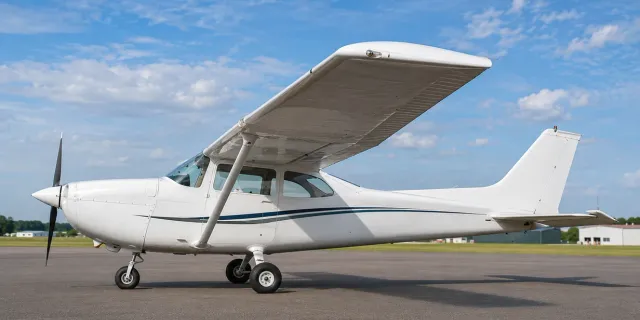
Aerodynamics; aerodynamic lift, drag and moments acting on aircraft and objects in the fluid is a foundational engineering course that covers flow types, boundary layer and separation concepts, dimensional analysis and similarity approach, potential flow theory, Kutta–Joukowski theorem, thin airfoil theory, finite wing aerodynamics and introduction to the panel method.
Calculus I
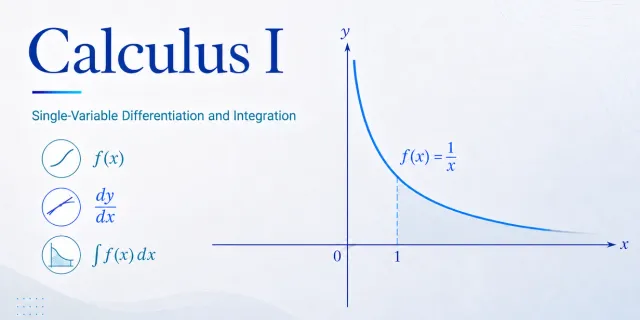
Calculus 1; concepts of functions, limit, continuity, derivative and integral is a foundational mathematics course that deals with calculation methods, graphic analysis, optimization, area-volume calculations and engineering applications.
Calculus II
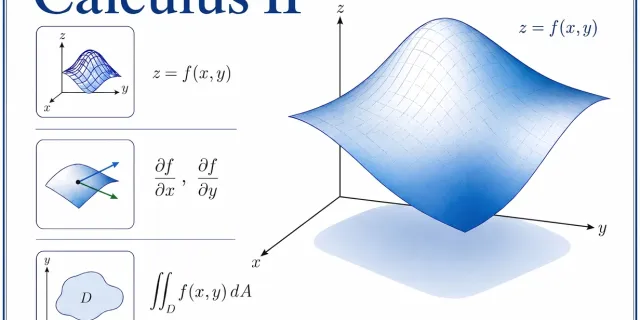
Calculus II is an advanced mathematics course that addresses infinite series, parametric and polar coordinates, space geometry, multivariable derivatives, multiple integrals and integration in vector fields together with geometric interpretation and engineering applications.
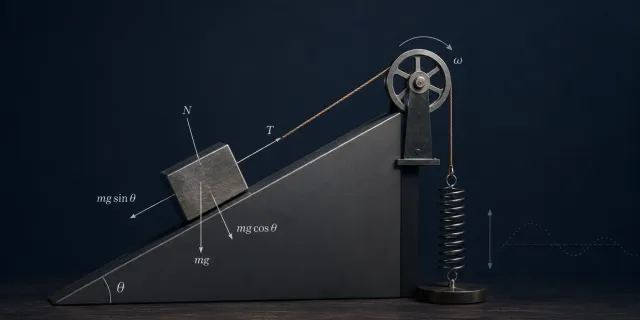
Physics I
Physics I support. It offers a concept-based and problem-solving focused academic study process on vectors, kinematics, Newton's laws, work-energy, momentum, rotational motion, gravitation and harmonic motion.
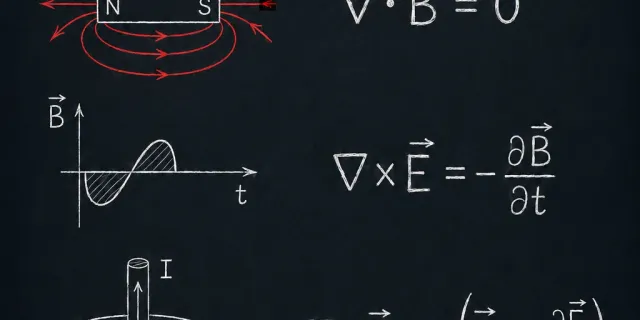
Physics II
Physics II support. It covers electric field, electric potential, electric circuits, magnetism, induction and electromagnetic waves.
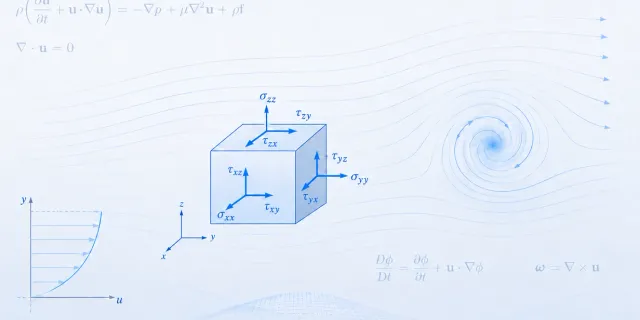
Advanced Fluid Dynamics
This graduate-level course covers the physical foundations, governing equations and analytical solution methods of viscous flows. Flow kinematics, stress and deformation, nondimensionalisation, vorticity dynamics, low-Reynolds-number flows and boundary-layer theory are studied together. Emphasis is placed on justifying model assumptions, deriving equations and interpreting results physically.
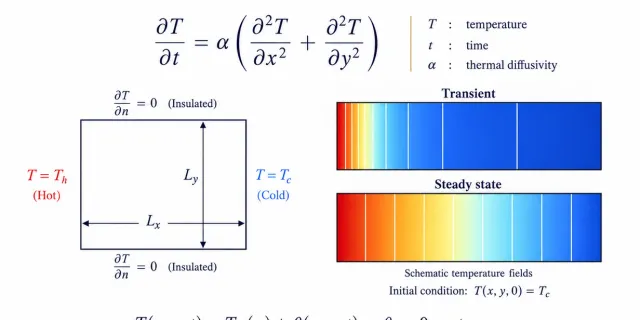
Advanced Heat and Mass Transfer
Advanced Heat and Mass Transfer is a graduate-level engineering course that addresses multidimensional and time-dependent heat conduction, boundary layer-based convection, analytical/semi-analytical convection models in internal and external flows, spectral radiation properties, inter-surface radiation and basic mass transfer with an analytical, numerical and physical modeling approach.
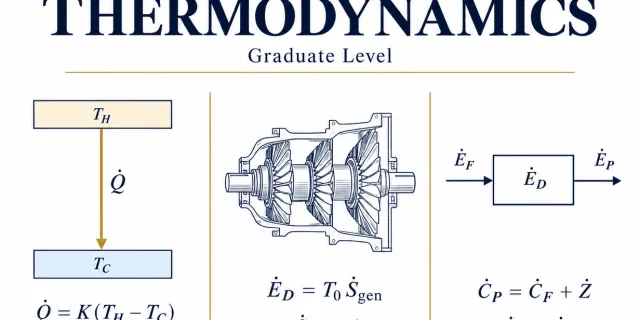
Advanced Thermodynamics
Advanced Thermodynamics is a graduate course that deals with the combined use of the first and second laws of thermodynamics, thermodynamic property relations, entropy-exergy analysis, irreversibility, power and refrigeration systems and finite time thermodynamics at an advanced engineering level.

Advanced Mechanical Vibrations
Advanced Mechanical Vibrations is a graduate-level engineering course that covers the transition from discrete systems to continuous systems, establishing equations of motion in continuous medium vibrations, determining boundary and initial conditions, eigenvalue problems, mode shapes, orthogonality, Hamilton's principle, approximate methods and damped/forced continuous system responses.
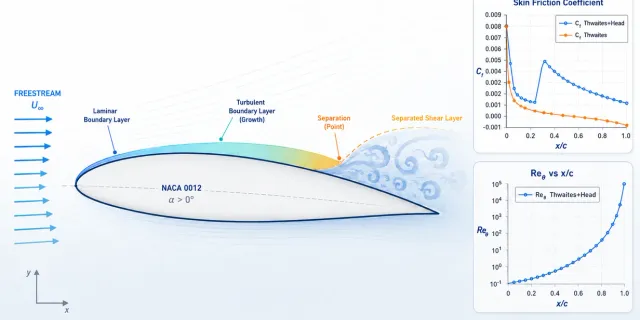
Boundary Layer Flows
Boundary layer flows support covers viscous flow, turbulence, momentum/heat transfer and similarity solutions.
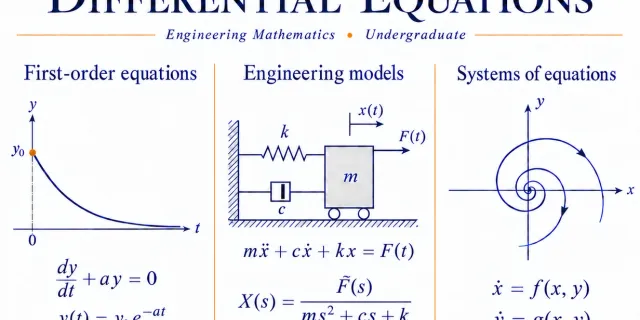
Differential Equations / Engineering Mathematics
Differential Equations / Engineering Mathematics is a foundational mathematics course that deals with mathematical modeling and solution methods of engineering problems through ordinary differential equations, initial value problems, series solutions, Laplace transform and linear systems.
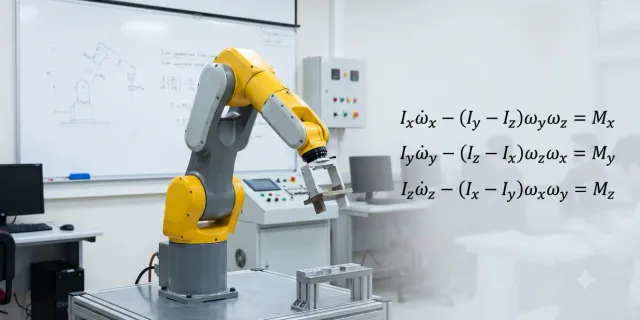
Dynamics
Dynamics is a basic engineering mechanics course that examines the motion of particles and rigid bodies with kinematic and kinetic approaches, and covers Newton's laws, work-energy, momentum-impulse, angular momentum, rotation around a fixed axis, general planar motion, analysis on moving axes, Euler's equations and introduction to mechanical vibrations.
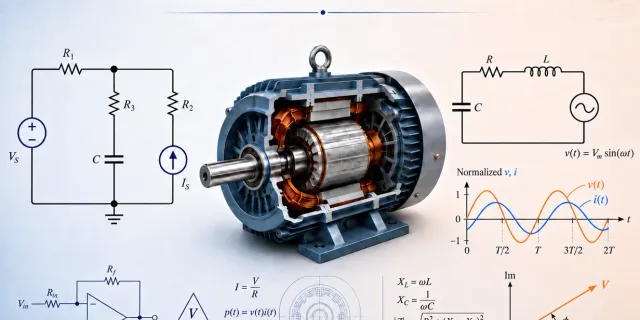
Electrical Circuit Fundamentals
Electrical Circuit Fundamentals is a foundational engineering course that covers current, voltage, power, Kirchhoff's laws, DC circuit analysis, circuit theorems, RC/RL/RLC transient regimes, AC circuits, phasor analysis, power calculation, basic semiconductor elements, op-amp circuits and introduction to electrical machines.
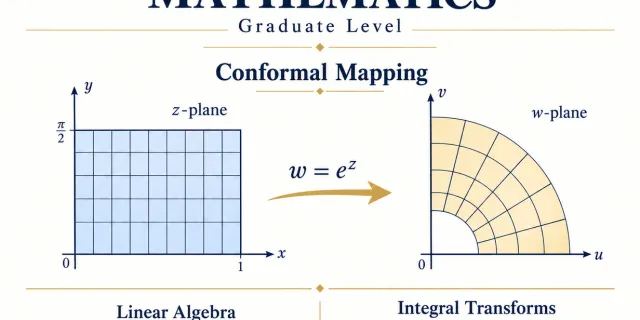
Engineering Mathematics
Engineering Mathematics is an applied mathematics course that addresses the mathematical background of advanced engineering problems through linear algebra, eigenvalue problems, Fourier–Laplace transforms, partial differential equations, complex analysis, conformal transformations and vector analysis.
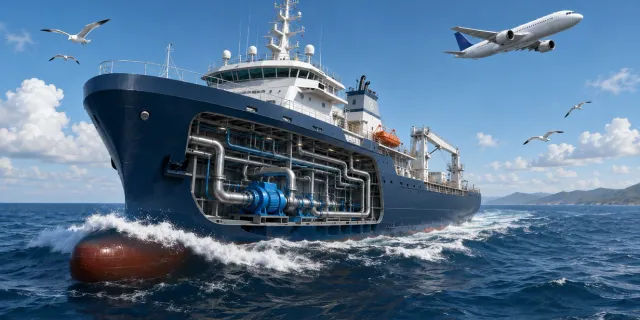
Fluid Mechanics
Fluid Mechanics is a foundational course that deals with the basic properties of fluids, hydrostatics, fluid kinematics, control volume and differential analysis, dimensional analysis, internal/external flow, turbomachines, water hammer and introduction to compressible flow with an engineering approach.
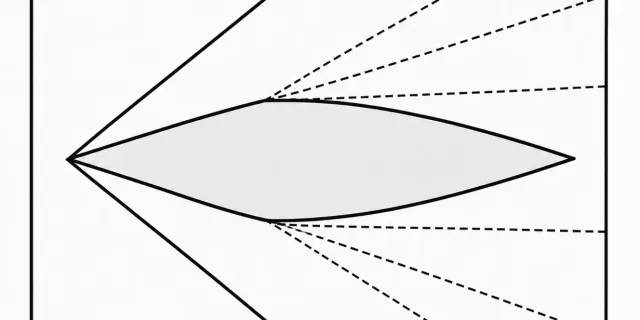
Gas Dynamics / Compressible Aerodynamics
Gas Dynamics / Compressible Aerodynamics is a foundational engineering course that starts from the basics of thermodynamics and covers isentropic flow, speed of sound, Mach waves, normal and oblique shocks, Prandtl–Meyer expansion waves, Laval nozzles, linear compressible flow theory, Fanno flow, Rayleigh flow, shock tube and introduction to hypersonic flow.
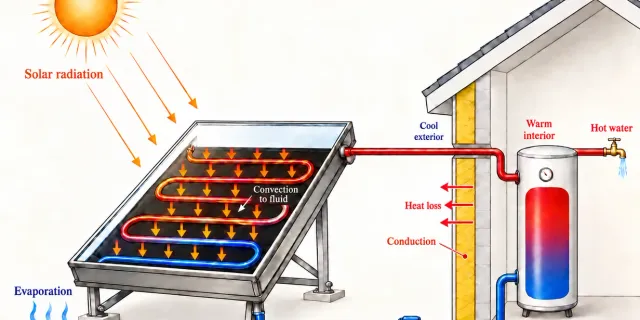
Heat and Mass Transfer
Heat and Mass Transfer is a foundational engineering course that deals with conduction, convection, radiation and basic mass transfer mechanisms together with energy balance, boundary conditions, engineering correlations and heat exchanger applications.
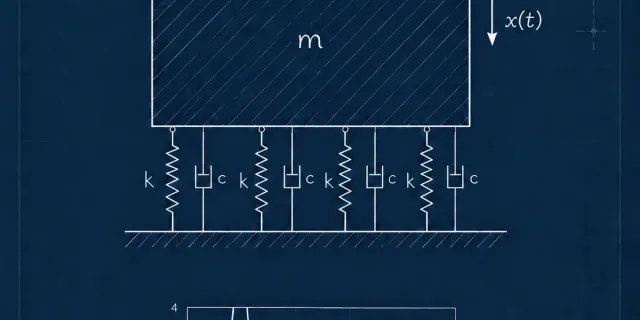
Mechanical Vibrations
Mechanical Vibrations is a foundational engineering course that deals with free, damped and forced vibrations of mechanical systems (discrete systems) through mathematical modeling, differential equation solution, frequency response, vibration isolation, dynamic vibration absorbers, modal analysis and critical speed problems.
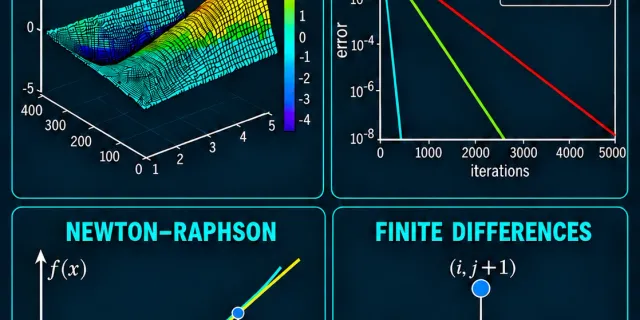
Numerical Methods
Numerical Methods is a basic engineering mathematics course that deals with approximate numerical solutions of engineering problems that are difficult to solve analytically, through error analysis, root finding, systems of linear equations, curve fitting, interpolation, numerical derivative, numerical integral and numerical solution of differential equations.
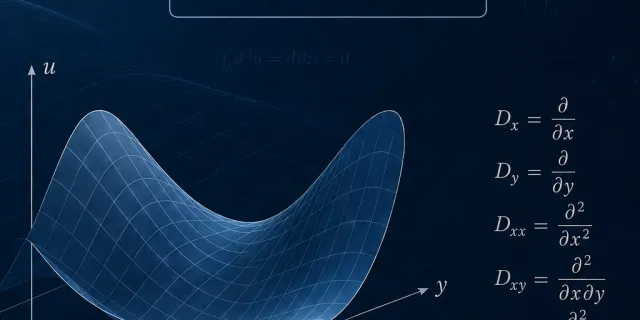
Partial Differential Equations (PDE)
Partial Differential Equations (PDE) is a graduate-level mathematics course that deals with boundary and initial value problems, Sturm–Liouville theory, orthogonal functions, Fourier series, transformation methods and analytical solution approaches of classical heat, wave, Laplace and Poisson equations.
Statics
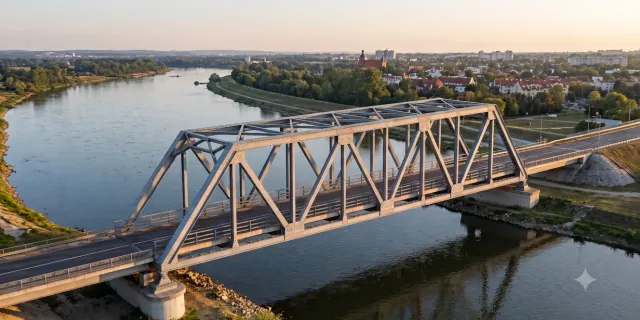
Statics is a basic engineering mechanics course that deals with force, moment, balance, support reactions, balance of rigid bodies, truss systems, frame and machine elements, distributed loads, modeling of fluid-induced loads, internal forces, N–T–M diagrams and area moment of inertia.
Strength of Materials
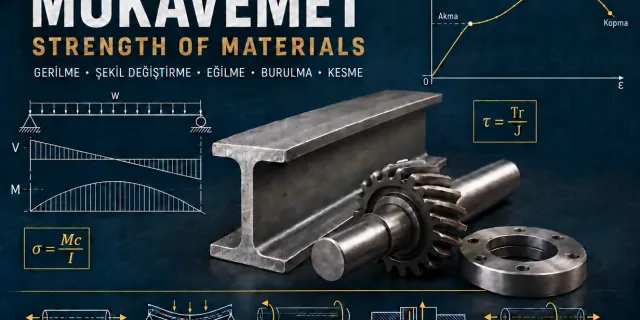
Strength of Materials is a foundational engineering course that deals with the behavior of engineering materials under load, stress, strain, axial loading, riveted connections, torsion, bending, transverse shear in beams and combined stress.
Thermodynamics
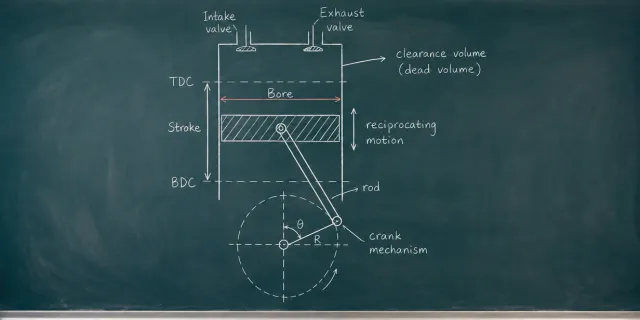
Thermodynamics is a foundational engineering course in which macroscopic systems are analyzed in terms of energy, matter, property changes and equilibrium states. In this context, pure substance behavior, ideal and real gas models, mass-energy balances in closed and open systems, first and second laws, entropy, exergy, power and cooling cycles are discussed together with engineering applications.

Numerical Methods in Fluid Dynamics and Heat Transfer
Doctoral Qualifying Preparation
Academic preparation support for doctoral students in aerospace, aeronautical, astronautical and mechanical engineering, planned around exam scope and current preparation.
View CourseSpecial Topics & Academic Consulting
Instruction and academic consulting in advanced engineering topics. Support with theoretical approaches, physical modelling and numerical solution methods for individual and organisational needs.
View CourseAP/IB
Courses at this level will be available soon.
Course Materials
Notes, examples, and technical materials supporting the courses will be prepared in this section.
Academic Ethics Principles
All work conducted at Turan Akademi is planned according to the principles of academic integrity, ethical responsibility, and supporting the development of each student's own learning process.
In accordance with our ethical values, no assistance is provided during any examination, and no homework, project, report, thesis, or similar academic work is prepared on a student's behalf.
Support is limited to subject instruction, concept explanation, the development of problem-solving skills, study planning, and academic guidance that helps students better understand and improve their own work.
Support for thesis and research processes is provided only within the scope of academic consulting, methodological guidance, literature-reading skills, problem definition, and technical evaluation; thesis-writing services are not provided under any circumstances.